
Monday, July 11, 2016
Murals featured on the Renewal Project
Check out the new Renewal Project website that highlights all six murals from the Mid-America Mural Project.

Saturday, January 30, 2016
"Called to Walls" Premiere in Lawrence, KS!

“Out of view of
the high art world and the hip gallery scene comes this heartening story
of unlikely partners in middle American working together to reexamine
their histories, celebrate what makes their towns unique, and imagine
their futures in the form of monumental community murals led by Lawrence
artist Dave Loewenstein. Called to Walls
is a thoughtful and uplifting film that not only leaves viewers
reassessing their notions of art, but also with an itch to go out and do
it themselves!”
Go to the "Called to Walls" website for more information
Friday, June 20, 2014
East Waco mural and the U.S. Deptartment of Arts and Culture
Here's a nice piece about the East Waco mural and its relationship to the new U.S. Department of Arts and Culture by Waco Tribune arts columnist David Smith.
“Almost every evil in America has an organized foe,” proclaimed
Outlook Magazine in 1907. Articles in the issue covering child labor in
the South and ways to protect the virtue of young women attending that
year’s Jamestown Exposition testified to the fight. Alongside these, there was praise for an organization in Indiana
that was contending for the belief that beauty is an essential part of
life and that “art should not be for the few, any more than education or
freedom is for the few.”
We live in an organizational society and formal organization has been seen as the key to getting things done since the heady days of the Progressive movement. In his insightful book “The Search for Order, 1877-1920” about this organizational impulse, American historian Robert Wiebe explained that reformers at the turn of the 20th century “prized their organizations not merely as reflections of an ideal but as sources of everyday strength.” This impulse is understandable and perhaps timeless: Participants in any movement against mainstream inertia are liable to feel the deck is stacked against them and draw strength from any way to sense they’re not alone in their fight. Those who wish to make the arts a greater part of civic life are no different.
Earlier this spring, a nationwide coterie of artists and activists formed a new organization provocatively called the U.S. Department of Arts and Culture. They conceive of art largely in terms of its ability to influence society in a particular direction. Despite the governmental-sounding label, they describe themselves as a “citizen-powered initiative to cultivate the public interest in art and culture and catalyze art and culture in the public interest.” They emphasize that active participation in the arts by the public as a means to greater civic engagement (a notion borne out by a National Endowment for the Arts study several years ago). Moreover, the ability of individuals to collaborate on a project — in their framework, something artistic — is “a key element of any resilient community.”

Kansas-based artist Dave Loewenstein, who came to Waco last year to help create the East Waco mural on Elm Street, is one of the organization’s first “cultural agents.” Their mission is to visit cities and host “vibrant, arts-infused gatherings” that draw a diverse cross-section of a community. They then discuss how the arts could transform that community and determine ways of reaching such a point together. We stayed in touch after his time here and last week he explained to me that the USDAC also serves artists by helping those who live and work away from traditional centers of the arts and culture to feel more connected to other artists and larger reservoirs of creative energy.
When Loewenstein talks about cultivating greater energy for the arts within a community, he isn’t simply referring to whether “an art program or cultural festival is good entertainment and benefits economic development.” These cultural agents want to create art projects that “actively engage citizens in the shaping, telling and sharing of their own unfolding stories.”
He says the mural he created here in Waco with the help of scores of local volunteers hints at how effective this enterprise can be, but at this stage it remains “a rare example.” There remain “many neighborhoods across the country that lack access to these kinds of opportunities,” he admits. The East Waco mural is indeed a striking visual piece. It’s even more impressive when you know the story behind its creation and how it reflects the ideals that made it possible.
David A. Smith, a Baylor University senior lecturer in history and Waco Symphony Association board member, can be reached at davidasmith.net.
We live in an organizational society and formal organization has been seen as the key to getting things done since the heady days of the Progressive movement. In his insightful book “The Search for Order, 1877-1920” about this organizational impulse, American historian Robert Wiebe explained that reformers at the turn of the 20th century “prized their organizations not merely as reflections of an ideal but as sources of everyday strength.” This impulse is understandable and perhaps timeless: Participants in any movement against mainstream inertia are liable to feel the deck is stacked against them and draw strength from any way to sense they’re not alone in their fight. Those who wish to make the arts a greater part of civic life are no different.
Earlier this spring, a nationwide coterie of artists and activists formed a new organization provocatively called the U.S. Department of Arts and Culture. They conceive of art largely in terms of its ability to influence society in a particular direction. Despite the governmental-sounding label, they describe themselves as a “citizen-powered initiative to cultivate the public interest in art and culture and catalyze art and culture in the public interest.” They emphasize that active participation in the arts by the public as a means to greater civic engagement (a notion borne out by a National Endowment for the Arts study several years ago). Moreover, the ability of individuals to collaborate on a project — in their framework, something artistic — is “a key element of any resilient community.”
Kansas-based artist Dave Loewenstein, who came to Waco last year to help create the East Waco mural on Elm Street, is one of the organization’s first “cultural agents.” Their mission is to visit cities and host “vibrant, arts-infused gatherings” that draw a diverse cross-section of a community. They then discuss how the arts could transform that community and determine ways of reaching such a point together. We stayed in touch after his time here and last week he explained to me that the USDAC also serves artists by helping those who live and work away from traditional centers of the arts and culture to feel more connected to other artists and larger reservoirs of creative energy.
When Loewenstein talks about cultivating greater energy for the arts within a community, he isn’t simply referring to whether “an art program or cultural festival is good entertainment and benefits economic development.” These cultural agents want to create art projects that “actively engage citizens in the shaping, telling and sharing of their own unfolding stories.”
He says the mural he created here in Waco with the help of scores of local volunteers hints at how effective this enterprise can be, but at this stage it remains “a rare example.” There remain “many neighborhoods across the country that lack access to these kinds of opportunities,” he admits. The East Waco mural is indeed a striking visual piece. It’s even more impressive when you know the story behind its creation and how it reflects the ideals that made it possible.
David A. Smith, a Baylor University senior lecturer in history and Waco Symphony Association board member, can be reached at davidasmith.net.
Wednesday, June 11, 2014
The 25 Most Amazing Community Arts Projects
The Mid-America Mural Project made this impressive list of projects.
Here's a quote from the introduction to their choices for the top 25 Community Arts Projects -
"For social workers, being involved in a community art project can be among the most rewarding and dynamic experiences. Primarily focused on engaging a community or a group of people, community arts projects involve a variety of media and often function to facilitate a dialogue within a group. Many of these projects are created and envisioned with the help of professional artists. Some of the community arts projects included in this list offer children and adults an opportunity to create art and build self-esteem, some are a means to revitalize disenfranchised communities, and some simply offer people a place to express themselves through a visual means. The following community arts projects were chosen for their ingenuity, their resourcefulness, and their ability to fully engage and inspire their communities."
Here's a quote from the introduction to their choices for the top 25 Community Arts Projects -
"For social workers, being involved in a community art project can be among the most rewarding and dynamic experiences. Primarily focused on engaging a community or a group of people, community arts projects involve a variety of media and often function to facilitate a dialogue within a group. Many of these projects are created and envisioned with the help of professional artists. Some of the community arts projects included in this list offer children and adults an opportunity to create art and build self-esteem, some are a means to revitalize disenfranchised communities, and some simply offer people a place to express themselves through a visual means. The following community arts projects were chosen for their ingenuity, their resourcefulness, and their ability to fully engage and inspire their communities."
 |
| click on the photo to see all 25 projects |
Thursday, May 1, 2014
Monday, March 31, 2014
Apprentice Catherine Hart writes about her experience in Waco, Texas
"In the Spring of 2013, I had the privilege of being selected to
apprentice with two of the most talented community based mural artists
working today. Lead artist, Dave Loewenstein and assistant artist, Ashley Laird,
took me under their wings and brought me through a two month process
that would forever change the way I perceive community, the creative
process, and the course of my life as an artist."
Read the rest of Catherine's photo essay "My life changed in Waco, TX" here.

Read the rest of Catherine's photo essay "My life changed in Waco, TX" here.
Wednesday, March 26, 2014
Waco apprentice completes new mural in North Carolina
Three cheers for Waco apprentice Catherine Hart who recently completed a collaborative mural with students at Bald Creek Elementary School in Burnsville, North Carolina. Read more about the project and see photos of the process here.

Monday, November 18, 2013
Hastings Mural Postcards are here!
Get these beautiful 5" x 14" folding postcards of the Hastings, Nebraska mural for just $1 each. Email Dave with your order at dloewenstein@hotmail.com


Wednesday, October 30, 2013
The completed Hastings, Nebraska mural!
Working Together Toward a People's Art
October 2013

lead artist - Dave Loewenstein
assistant - Amber Hansen
apprentice - Rebecca Harrison
project coordinator - Kaleena Fong
With guidance and generous assistance from over three-hundred Hastings residents, especially Dave Stewart.
Project Support from:
Mid-America Arts Alliance
National Endowment for the Arts
Nebraska Arts Council
Hastings Community Arts Council
Adams County CVB
Community Redevelopment Authority
Kitty M. Perkins Foundation
Mary Lanning Healthcare


October 2013
 |
| Before |

lead artist - Dave Loewenstein
assistant - Amber Hansen
apprentice - Rebecca Harrison
project coordinator - Kaleena Fong
With guidance and generous assistance from over three-hundred Hastings residents, especially Dave Stewart.
Project Support from:
Mid-America Arts Alliance
National Endowment for the Arts
Nebraska Arts Council
Hastings Community Arts Council
Adams County CVB
Community Redevelopment Authority
Kitty M. Perkins Foundation
Mary Lanning Healthcare


 |
| Before |

Sunday, October 20, 2013
Hastings Mural Project Loony-Toons?!

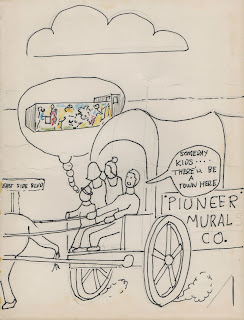
The 40 page book includes all of Dave's hilarious drawings that poke fun at the artists, the mural process and other Hastings' characters. The book also reproduces Dave's heartwarming speech at the mural dedication and a short essay by lead artist Dave Loewenstein. Click on the image below to preview the book and order copies.
Tuesday, October 15, 2013
Community Mural Dedicated in Hastings
from the Grand Island Independent
October 14, 2013
October 14, 2013
 |
| photo by Lauri Shultis |
 |
| photo by Lauri Shultis |
 |
| photo by Lauri Shultis |
Thursday, October 10, 2013
Mural Dedication
You are invited!
Sunday, October 13th
4:00 pm
Hastings Community Mural
Celebration and Dedication
(located behind Depot Plaza at Eastside Blvd. & 4th St.)
speakers, refreshments, music
 |
| Before |
Tuesday, October 8, 2013
Time-lapse video of painting the Hastings mural
Thanks to Assistant Muralist Amber Hansen we have this wonderful time-lapse of the first few weeks of painting the Hastings mural. Click on the image below.

Thursday, September 26, 2013
Mural dialogue appears in the Hastings Tribune
People have begun to notice the mural taking shape over on East Side Boulevard. Community painting days brought nearly 250 volunteers out to begin filling in our block-long canvas. Drivers slow down and stop to try to make out the images. Merchants and shoppers on Second Street ask us how it's going and give their two cents about the design. The media has taken notice too. Articles and reports in local papers and tv news programs have highlighted the project focusing mainly on the buoyant mood surrounding the collaborative painting. Less expected was the wonderfully positive editorial that ran in the Hastings Tribune last week.
It seems the editorial has sparked a dialogue about the importance of the mural and whether the city should focus its efforts elsewhere. In the days following two letters to the editor appeared. Here is the first.
And then just a couple days later, this appeared as a rebuttal.
A debate about the importance of community-based art in the local newspaper. An honest discussion among residents about the relative value of art versus other amenities in their community. Who would have seen this coming? Whichever side you're on, this is good news. When we start talking to each other (even if it begins in the letters column of the paper) about art and its role in our lives we are making progress. Thanks to the Tribune and the letter writers for beginning the discussion.
 | ||
| Lead editorial in the September 19th Hastings Tribune. |
It seems the editorial has sparked a dialogue about the importance of the mural and whether the city should focus its efforts elsewhere. In the days following two letters to the editor appeared. Here is the first.
 |
| Letter to the editor in the September 20th Hastings Tribune. |
And then just a couple days later, this appeared as a rebuttal.
 |
| Letter to the editor in the September 24th Hastings Tribune. |
A debate about the importance of community-based art in the local newspaper. An honest discussion among residents about the relative value of art versus other amenities in their community. Who would have seen this coming? Whichever side you're on, this is good news. When we start talking to each other (even if it begins in the letters column of the paper) about art and its role in our lives we are making progress. Thanks to the Tribune and the letter writers for beginning the discussion.
Wednesday, September 25, 2013
The Hastings mural design
We are well into painting our mural in Hastings. In fact the dedication will be this Sunday, October 13th at 4pm. Stop by if you're in the area.
For the sixth and final mural of the (first round) of the Mid -America Mural Project, we decided to pull the curtain back on our process and reveal some of what goes on behind the scenes. Call it a mural within a mural or a meta-mural, it was a way for us to honor and recognize the many people who participate and to give a glimpse into the design process.
In the Hastings design we follow the process from wall prep to research to design to transfer and finally community painting. Along the way, many of those who have helped us appear. Below is a description of the design from left to right. It is illustrated with the line drawing we used to project the design onto the wall.


The mural begins with two volunteers preparing the wall. One is priming, the other measuring. A shadow of bike rider on the bike path is cast onto the wall from behind them. To their right, giant figures wade into a pile of possibilities comprising Hastings culture and history, that, when sorted out and edited down, will become elements of the mural. The things that these design team members touch / select go from monochrome to full-color indicating their preference.

Under the encouraging watch of a mustachioed local celebrity (actually the main figure of a mural in the Kensington) the mural team delves into the history and culture of Hastings sharing their discoveries with each other at the Hastings Museum. On their research table, a collection of seemingly unrelated items interact, including the statue of a Pawnee man, a polar bear, Kool-Aid stand, rattlesnake, Prairie Loft Barn, and Sandhill cranes.

Switching over to a scene in front of the yet to be painted wall, young mural designers begin by making drawings on the sidewalk. Two of them invoke fantasies of flight and hopes guided by dandelion seeds, while another contemplates the cycle of water from rain to farm to aquifer.

The design for this mural in a mural begins to take shape symbolized by a Hastings brick layer putting the first pieces together. He is joined by design team members who, holding up the unfurling image, share their creation with us.Their creation includes a stylized version of Fisher Fountain surrounded by symbols of local agriculture and architecture. Fireworks light up the sky as the mural design is projected onto the wall.


Before the illuminated wall, neighbors join the fun playing with shadow puppets in front of a design proposal by Dave Stewart. The final section of the mural, we see Hastings' folks young and old participating in community painting weekend. Cast across the figures of the painters and onto the wall in front of them, the shadow of an old steam locomotive passes silently into history.

For the sixth and final mural of the (first round) of the Mid -America Mural Project, we decided to pull the curtain back on our process and reveal some of what goes on behind the scenes. Call it a mural within a mural or a meta-mural, it was a way for us to honor and recognize the many people who participate and to give a glimpse into the design process.
In the Hastings design we follow the process from wall prep to research to design to transfer and finally community painting. Along the way, many of those who have helped us appear. Below is a description of the design from left to right. It is illustrated with the line drawing we used to project the design onto the wall.


The mural begins with two volunteers preparing the wall. One is priming, the other measuring. A shadow of bike rider on the bike path is cast onto the wall from behind them. To their right, giant figures wade into a pile of possibilities comprising Hastings culture and history, that, when sorted out and edited down, will become elements of the mural. The things that these design team members touch / select go from monochrome to full-color indicating their preference.

Under the encouraging watch of a mustachioed local celebrity (actually the main figure of a mural in the Kensington) the mural team delves into the history and culture of Hastings sharing their discoveries with each other at the Hastings Museum. On their research table, a collection of seemingly unrelated items interact, including the statue of a Pawnee man, a polar bear, Kool-Aid stand, rattlesnake, Prairie Loft Barn, and Sandhill cranes.

Switching over to a scene in front of the yet to be painted wall, young mural designers begin by making drawings on the sidewalk. Two of them invoke fantasies of flight and hopes guided by dandelion seeds, while another contemplates the cycle of water from rain to farm to aquifer.

The design for this mural in a mural begins to take shape symbolized by a Hastings brick layer putting the first pieces together. He is joined by design team members who, holding up the unfurling image, share their creation with us.Their creation includes a stylized version of Fisher Fountain surrounded by symbols of local agriculture and architecture. Fireworks light up the sky as the mural design is projected onto the wall.


Before the illuminated wall, neighbors join the fun playing with shadow puppets in front of a design proposal by Dave Stewart. The final section of the mural, we see Hastings' folks young and old participating in community painting weekend. Cast across the figures of the painters and onto the wall in front of them, the shadow of an old steam locomotive passes silently into history.

Wednesday, September 18, 2013

Saturday, September 7, 2013
Getting to know Hastings
Like many towns on the Plains, Hastings traces its development (after the Pawnee were forced to move to Oklahoma) to the railroad. But unlike some towns who's rails haven't been used in decades and depots that haven’t seen a traveler since soldiers returned from WWII, trains both freight and passenger continue to stop here regularly. It’s a crossroads - of train lines, of trails, of flyways for migrant
birds, and of paths for migrant workers following the rhythms of
planting and harvest.

Corn is king of the economy and ingrained into the culture. We tend to think of it as fuel for livestock and automobiles and a symbol of the Nebraska football team, but corn is a staple and a revered symbol for the Pawnee as well. Just the other day outside of Kearney, we saw a small stand of Pawnee Eagle Corn, once thought to be lost and extinct, restored and growing vigorously after a few protected seeds were found by the tribe in Oklahoma.
Today, Hastings is in the midst of a modest revival. After years of struggling with a changing economy, development plans that took businesses out of downtown and slow population growth, residents and city leaders are looking back to the heart of their community for inspiration. A city that was beset with ground water pollution problems in the 1980’s, Hastings was named “America’s Greenest City” in 2007 by Yahoo! The progress that has resulted, which as one of our design team members reminded us is not the same as growth, has come largely from creative reuse and reimagining of what was already here - including former residents who have begun to move back after realizing what they missed.
One example is on the grounds of the old State Hospital, known as the Regional Center, where Prairie Loft is reintroducing visitors to agriculture appreciation, outdoor education, cultural traditions, and the wise use of natural resources. Also, the area that once comprised the massive Navy Ammunition Depot just east of downtown has been repurposed as many things including Central Community College and the Good Samaritan Retirement Village. And many of downtown’s buildings are being restored to new uses including The Lark, an art and performance space that is scheduled to open in December.
But the best story of reinvention I’ve heard here comes from one of our own design team members, Dave Stewart. He is a living example of creative reimagining of one's own life and vocation. A custodian for the Hastings College art department Dave, at age forty-nine, was inspired to take an art class and then another and another. That was twenty-five years ago. Today, Dave, who I'll write more about later, is one of the region's most important and highly esteemed working artists.
A big question for the design team is - What else can be reimagined? What cultural traditions and forgotten histories can be restored? Who's voices need to be amplified? And how? Our design team was quick to realize that the mural itself will be a reimagining of the wall and the creative reuse of a place that was once a rail line and is now the Pioneer Spirit bikeway.
The process of designing and creating the mural are tangible examples of the too often forgotten role citizens play in shaping the place they live. We together through this process are reclaiming how the community including its history, current challenges and future aspirations is portrayed and understood. What was for years the unadorned back side of a strip mall, will soon be a collective vision of Hastings ongoing renaissance.
And this may be the most important part of what we have been doing in Tonkawa, Newton, Joplin, Arkadelphia, Waco and now Hastings - modeling a process of community engagement that takes the form of a collaborative public mural. If we do it right, our artwork will be evidence of our commitment to each other, our conversations, research and new perspectives. Hopefully it will endure as a touchstone, reminding viewers of what is possible when we come together in a spirit of respect and affection to first think and then act on our shared interests.

Corn is king of the economy and ingrained into the culture. We tend to think of it as fuel for livestock and automobiles and a symbol of the Nebraska football team, but corn is a staple and a revered symbol for the Pawnee as well. Just the other day outside of Kearney, we saw a small stand of Pawnee Eagle Corn, once thought to be lost and extinct, restored and growing vigorously after a few protected seeds were found by the tribe in Oklahoma.
 |
| Amber in a garden of traditional Pawnee corn. |
 |
| Pawnee Eagle Corn kernels. |
Today, Hastings is in the midst of a modest revival. After years of struggling with a changing economy, development plans that took businesses out of downtown and slow population growth, residents and city leaders are looking back to the heart of their community for inspiration. A city that was beset with ground water pollution problems in the 1980’s, Hastings was named “America’s Greenest City” in 2007 by Yahoo! The progress that has resulted, which as one of our design team members reminded us is not the same as growth, has come largely from creative reuse and reimagining of what was already here - including former residents who have begun to move back after realizing what they missed.
One example is on the grounds of the old State Hospital, known as the Regional Center, where Prairie Loft is reintroducing visitors to agriculture appreciation, outdoor education, cultural traditions, and the wise use of natural resources. Also, the area that once comprised the massive Navy Ammunition Depot just east of downtown has been repurposed as many things including Central Community College and the Good Samaritan Retirement Village. And many of downtown’s buildings are being restored to new uses including The Lark, an art and performance space that is scheduled to open in December.
But the best story of reinvention I’ve heard here comes from one of our own design team members, Dave Stewart. He is a living example of creative reimagining of one's own life and vocation. A custodian for the Hastings College art department Dave, at age forty-nine, was inspired to take an art class and then another and another. That was twenty-five years ago. Today, Dave, who I'll write more about later, is one of the region's most important and highly esteemed working artists.
 |
| Dave Stewart in his studio. |
A big question for the design team is - What else can be reimagined? What cultural traditions and forgotten histories can be restored? Who's voices need to be amplified? And how? Our design team was quick to realize that the mural itself will be a reimagining of the wall and the creative reuse of a place that was once a rail line and is now the Pioneer Spirit bikeway.
 |
| Design team visiting the mural site. |
The process of designing and creating the mural are tangible examples of the too often forgotten role citizens play in shaping the place they live. We together through this process are reclaiming how the community including its history, current challenges and future aspirations is portrayed and understood. What was for years the unadorned back side of a strip mall, will soon be a collective vision of Hastings ongoing renaissance.
 |
| Rebecca leading a go-around with the design team. |
 |
| Design team members in action. |
And this may be the most important part of what we have been doing in Tonkawa, Newton, Joplin, Arkadelphia, Waco and now Hastings - modeling a process of community engagement that takes the form of a collaborative public mural. If we do it right, our artwork will be evidence of our commitment to each other, our conversations, research and new perspectives. Hopefully it will endure as a touchstone, reminding viewers of what is possible when we come together in a spirit of respect and affection to first think and then act on our shared interests.
Thursday, August 22, 2013
Public Art in Hastings, NE
As we begin the design process here in Hastings, one of our first research adventures was to go on a tour of existing public art in and around downtown. Here are a few of our finds.

 |
| "A Narrow Escape" by David L. Biehl at the Hastings Museum. |
 |
| "Hau Kola" by Herb Mignery at the Hastings Museum |
 |
| "Andy" by The Caped Crusaders |
 |
| "Peacekeeper" by George Lundeen. |
 |
| Mural about German immigrants who came to the U.S. via Russia. |
 |
| Mural by high school students in 1987 at the downtown post office. |
 |
| Murals at Alcott Elementary School. |

 |
| Historical mural in the Adams County Courthouse by Gib Neal. |
 |
| Murals by Giuseppe Aprea inside the Kensington (formerly Clarke Hotel). |
 |
| Sandhill Crane exhibit with mural background at the Hastings Museum. |
 |
| Diorama about early European settlers at the Hastings Museum. |
 |
| Amber with mural at the entrance to the Kool-Aid exhibit. |
 |
| Fisher 'Rainbow' Fountain built in 1932. |
Subscribe to:
Posts (Atom)